Decimal Hours Calculator: Why 7.30 Is Not 7 Hours 30 Minutes
7.30 decimal hours is 7 hours 18 minutes. Seven hours and thirty minutes is 7.50 decimal hours. The digits after a decimal point are a fraction of an hour; the digits after a colon can represent minutes. Check which format your timecard uses before comparing it with a pay statement.
FREE TIMECARD FORMAT CHECKER
Same-looking numbers.
Different amounts of time.
7:30 → 7 hours 30 minutes
7.30 → 7 hours 18 minutes
Convert the format first. Then compare the same dates, breaks and pay categories.
Hours and minutes to decimal hours
Enter a duration, not a clock-in time. For example, a seven-and-a-half-hour shift is 7 hours and 30 minutes.
Your result appears here.
Decimal hours to hours and minutes
Your result appears here.
Conversions use the values entered. Decimal results show display rounding; reverse conversions round to the nearest second. This tool does not apply an employer’s punch-rounding policy or decide which time is paid.
Keep a shift record to compare on payday: preview EarnCheck →
Minutes to decimal hours: quick reference
Use hours + minutes ÷ 60. For the reverse, multiply the fractional part of a decimal hour by 60.
| Duration | Decimal hours |
|---|---|
| 6 minutes | 0.10 |
| 15 minutes | 0.25 |
| 18 minutes | 0.30 |
| 20 minutes | 0.333333… |
| 30 minutes | 0.50 |
| 45 minutes | 0.75 |
| 7 hours 20 minutes | 7.333333… |
| 7 hours 30 minutes | 7.50 |
Why rounded shift totals can look different
Three durations of 7 hours 20 minutes add to exactly 22 hours: 440 + 440 + 440 = 1,320 minutes. Adding three displayed values of 7.33 instead produces 21.99. That small difference can come from display rounding. Keep the original minutes and inspect how the system totals them before treating the difference as missing time.
Before asking payroll about a difference
- Confirm whether the field uses decimal hours or hours and minutes.
- Compare the same pay-period dates and confirmed shifts.
- Check unpaid breaks, any stated rounding method and separate pay categories.
- Ask which underlying records produced the total. Keep the question neutral.
Copy-ready question: “Could you confirm whether the hours on this statement are decimal hours, and how they were calculated from my time records? I would like to compare the same dates and break deductions.”
EARNCHECK · IPHONE & IPAD
Keep the shift.
Check the statement.
EarnCheck keeps an independent shift record and compares estimated gross pay with the figures you enter from your pay statement, line by line.

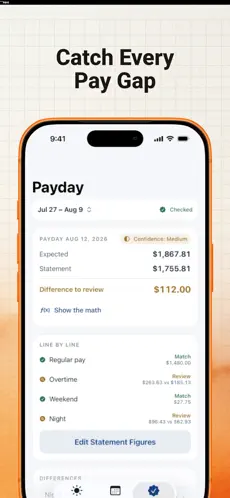
Actual App Store screenshots with sample data. This web converter is independent; its entries do not transfer into the app.
Paid download: US$2.99 when checked November 15, 2026, plus optional Pro subscriptions. Check your regional App Store price. Requires iOS/iPadOS 18 or later.
See EarnCheck and current price →No account, bank login or employer login. A difference is a prompt to review; it is not proof of a payroll error. EarnCheck does not calculate taxes or deductions.
Questions about decimal time
Is 0.10 of an hour ten minutes? No. 0.10 × 60 is six minutes.
Is 7.50 the same as 7.5? Yes. Both mean seven and a half hours: 7 hours 30 minutes.
Does this calculator calculate overtime or take-home pay? No. It converts time formats only. Overtime eligibility, pay rules, taxes and deductions need separate checks.
Reference: the North Carolina Department of Labor minutes-to-decimal-hours chart provides a full conversion table. The formulas and worked examples above explain the arithmetic.
Published by Honest Little Apps, the publisher of EarnCheck. The web tool is free; the app is a separate paid download. Press and resource questions: simpletonfacts@gmail.com.
Planning income from your hours? Use the hourly-to-salary converter for a separate gross-pay estimate.
Comments
Post a Comment